


View Thread
 5G Weapons Technology Thread
|
|
| Deathblow |
Posted on 06-12-2005 03:18
|
 Posts: 28 Joined: December 04 2005 |
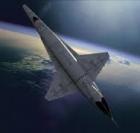
TAM sounds similar to the kill vehicle of the ground based interceptor being researched for modern day missile defense...perhaps it has some defensive anti-missile potential as well http://www.globalsecurity.org/space/s...ms/gbi.htm Edited by Deathblow on 06-12-2005 03:28 |
|
|
|
| MarieHawke |
Posted on 06-12-2005 06:48
|
 Posts: 501 Joined: September 02 2005 |
That's kinda a bad system, really. Okay, so you have kill vehicles. The enemy could easily put numerous balloons around each MIRV (or warhead) to confuse the system into thinking that the balloons are the MIRVs (or warheads). So you look for the signal the warhead is putting out. Put ECM on the balloons to confuse the interceptors as well. In short, seen it already, at least I have 
A starlight sharpshot magical girl!
|
|
|
|
| TelQuessir |
Posted on 06-12-2005 07:34
|
 Posts: 2598 Joined: August 30 2005 |
Daniel, that is a natural process in the war of evolution and counter-evolution - the seeker and your sensors just need to be smart enough to distinguish between dummy or real warheads, or fire enough interceptors to down them all. Entertain me better. Or else! (note, inside joke  ) |
|
|
|
| Deathblow |
Posted on 06-12-2005 12:41
|
|
Posts: 28 Joined: December 04 2005 |
Quote DanielHawking wrote: That's kinda a bad system, really. Okay, so you have kill vehicles. The enemy could easily put numerous balloons around each MIRV (or warhead) to confuse the system into thinking that the balloons are the MIRVs (or warheads). So you look for the signal the warhead is putting out. Put ECM on the balloons to confuse the interceptors as well. Yeah. Current opinion is that there a 99.9% chance that the missile will miss the target and is a completely inadequate system at the moment... driven more by Congress and politicians than military practically and effectiveness  ead::no: In its first major testing demonstration in front of congress and military bigwigs the EKV was given pre-programmed coordinates about the intercept path and how to differentiate the radar sig of the decoys and it still missed the kill. Very, very immature technology at the moment.... needs quantum leaps in accuracy and cost efficiency to be practical... The mechanics of the TAM are still basically the same as the EKV, practically the same concept imho. Acceleration to attack velocities (either by railgun or chemical rockets) and then lattitude adjustments to intercept the target. EDIT: Then again, it may depends of the velocity of the enemy missiles to whether the system is adequate for anti-missile defense. One would imagine missiles would reach velocities of greater than 2000 km/sdepending on the available propulsion systems. Edited by Deathblow on 06-12-2005 13:00 |
|
|
|
| Itharu |
Posted on 07-12-2005 03:27
|
 Posts: 363 Joined: September 23 2005 |
Quote TelQuessir wrote: Daniel, that is a natural process in the war of evolution and counter-evolution - the seeker and your sensors just need to be smart enough to distinguish between dummy or real warheads, or fire enough interceptors to down them all. Is there room for a personel piloted missile such as one that would be monitered by a person very mentially agile in directing about 3 TAMs to their target from the ship? Like each TAM could have a camera and the 'missile guide' on the ship would chose the targets the missle was after and only change as per orders from the 'guide'. Would be a counter to the counter-measures. -Fear the Might of the Imperial Cortharian Fleet
|
|
|
|
| TelQuessir |
Posted on 07-12-2005 03:43
|
|
Posts: 2598 Joined: August 30 2005 |
That basically means risking a pilot unnecessarily at the helm of something like a Baka Bomb from WW2. The response time of the pilot will be way slower than any electronic guidance system while the sensor input available to him is identical to that fed into a missile seeker. Interception velocities will be identical to or exceed that of present anti ballistic missile trajectories - try to pilot anything in a 200km/s visual interception. It doesn't take much imagination to conclude that warships in sci-fi would require some serious auto-guidance capability to achieve our performance requirements in fiction in routine operations. Edited by TelQuessir on 07-12-2005 03:44 |
|
|
|
| Glacialis |
Posted on 07-12-2005 15:09
|
 Posts: 368 Joined: September 02 2005 |
In David Weber's Honorverse, missile combat is conducted at ranges where two million kilometers is considered close range. I don't want to spoil the series, but it's safe to say that long range is significantly longer. The delay of missile telemetry due to distance is a factor compensated for by sophisticated evasion and attack run routines, as well as seeding the salvo with EW warheads. In that universe, FTL comms is just about impossibly. If there was a way to communicate instantly or with a significantly reduced time lag, that faction would have a tremendous advantage. In the HW/PDS universe, distances aren't quite that large. Delays in telemetry and the relatively primitive missile AI routines -- but only in comparison to Honorverse! -- are still problematic and will become increasingly so with distance. Unless you had a missile guidance crew close to the target then it's not going to be effective to modify those routines during warhead flight. Tweaking the missile computer's routines at launch, now that's where highly skilled tac officers shine. Combining knowledge of the opposition's EW and point defense capabilities with technological advantages, oh yeah! Long story short: Distance bad for real-time corrections. Even if your neural network is linked to the ship's computer, and your brain can somehow handle those corrections fast enough -- do you really want your missiles remotely programmable? Sure it's unlikely someone will be able to reprogram your missiles in flight...but it's always possible, if you engineer the capability in the first place. Skill, knowledge, good equipment and good tactical instincts are essential for configuring a missile salvo at launch time. After that, you wait. |
|
|
|
| Cobalt Shiva |
Posted on 07-12-2005 23:59
|
 Posts: 118 Joined: September 07 2005 |
He's suggesting placing a small vessel forward of the launch ship to provide last-minute adjustments to the missile course, thereby overcoming the time-delay problem. So - he does want to put a guidance crew close to the target. Here's a 5G weapon for you: mount an inertial dampener (like those used on some strikecraft) on an HVM. Tune the damper to increase inertial mass in its area of effect, then shoot it at an enemy ship. You'll cause some major structural shock (as parts of the vessel suddenly gain mass and begin responding differently to acceleration,) cause tremendous system damage (the field will go right through armor), and (if we assume that an enemy ship's inertial dampers give it partial protection) at least screw up their own dampers and artificial gravity systems. The downside would be that the missile itself would be slower than most HVMs. In-game, it'd be a high-damage missile with considerable effect on systems but a lower-than-normal rate of travel, maybe between HVMs and the nuke warheads in NGCS. Workable? "This is tactical control..."
|
|
|
|
| TelQuessir |
Posted on 08-12-2005 00:40
|
|
Posts: 2598 Joined: August 30 2005 |
A scout ship employed as the equivalent of a OTH targeting asset (over the horizon missile firing today), is a vastly different concept from a man stuffed into a weapon. One is a valid presentation of a present day doctrine that allows for a good enhancement to warship capability while the other is unimaginative and impractical. |
|
|
|
| Itharu |
Posted on 08-12-2005 16:39
|
|
Posts: 363 Joined: September 23 2005 |
What about a renessance on a Jamming / Co-ordination / Overseer ship. One that would be tough enough to fight in the thick of battle and have the facilites to co-ordinate the TAM missiles being launched. I know it doesn't sound new, but there has been a lack for a new type of Fire Control Tower.
-Fear the Might of the Imperial Cortharian Fleet
|
|
|
|
| Inert |
Posted on 09-12-2005 04:24
|
 Posts: 388 Joined: September 08 2005 |
Any thoughts about reducing visibility range and forcing the use of "drone" scouts to place long range strikes? |
|
|
|
| Deathblow |
Posted on 09-12-2005 23:11
|
|
Posts: 28 Joined: December 04 2005 |
Quote Inert wrote: Any thoughts about reducing visibility range and forcing the use of "drone" scouts to place long range strikes? In regards to NGCS, I'ld actually be in favor for just the opposite... removing the fog-of-war totally and letting all ships see all other ships from the get-go... more realistic. |
|
|
|
| Inert |
Posted on 09-12-2005 23:15
|
|
Posts: 388 Joined: September 08 2005 |
That would pretty much let you fire on ships from your starting position then? I don't really like the idea of being able to constantly viewable by enemy. It makes every move you do noticeable. So unless we equip sensor distortion of ships... or something. |
|
|
|
| Deathblow |
Posted on 10-12-2005 00:01
|
|
Posts: 28 Joined: December 04 2005 |
Its a pretty abrupt paradiagm shift from the standard RTS setup yes. Most won't like it, but is the goal to make just another RTS or is the goal a "combat simulator"... or something in between. All depends on how much "simulator" versus how much "RTS" you want... ... its seems like we are talking about several different versions of the next PDS in this thread anyway. Could easily be different for each of the versions. EDIT I'm doing some research to exam the arguments, and right now stealth and fog-of-war are looking kindof weak, without much RL plausibility. Not finished though. Deep and involved debate about the possibility and impossibilities of stealth and sensor range performances in space Edited by Deathblow on 16-12-2005 03:40 |
|
|
|
| EvilTediz |
Posted on 13-12-2005 04:11
|
 Posts: 12 Joined: December 12 2005 |
Marines in ASCA armor might be able to withstand the acceleration. As for piercing the armor well the torpedo could de-accelerate before hitting the ship. Then clamp on to it and either cut or blow through the hull. Could be a nice alternative to use instead off risking a frigate. However attrition rates would be high because of no return and many torpedos would be shot down en route by enemy PDS systems. So they would have to be launched en masse for best results. A Destroyer class sized hull out fitted with these mounted in racks could be deadly for lone capital ships. Interesting. Edit: Sry didn't see you post. I actually wrote a whole topic of planetary assault and the stages of it. But I closed the window by accident before posting the topic. I'll probably make it again tommorow. Edit..again!: Good point. And by the first edit I meant your post way up there not down here. Edited by EvilTediz on 13-12-2005 04:33 |
|
|
|
| TelQuessir |
Posted on 13-12-2005 04:30
|
|
Posts: 2598 Joined: August 30 2005 |
On the other hand the opponent cruiser simply has to simply outmaneuver your assault pods, eat up your woefully underarmed mobile suit carrier and be done with it. Just as you will not conduct a speedboat boarding action on a blue-water capital ship in the open sea you will not even think of using ASCAs as stand-ins for capital ship armaments. Standoff deployment capability for ASCAs and lighter infantry armours are a very desirable feature - but you will not use a SEAL delivery vehicle launched from a submarine to do a ADCAP or Harpoon's role in destroying a target with direct force. I believe the separation between RTS and simulator is obvious. The same can be said for my focus in NGCS. |
|
|
|
| Vor_Rhonin |
Posted on 15-12-2005 09:08
|
 Posts: 42 Joined: November 14 2005 |
I wouldn't mind the idea of keeping the fog of war in place. Even with all the modern tech in the world today, we still have to find the enemy before we can kill him. It just takes less time now than 100 years ago. We don't know where every enemy soldier or vehicle is hiding the moment we turn our attention to an area. We have to have the intell types go over all the data we have available, get whatever more they need, do their magic, and then tell us what we should know (we hope). Recon is considered the most crucial aspect of warfare. If you don't have it, you are in that handbasket... If that was not the case we would not have any use for our cavalry units, such as the 'Blackhorse' at Ft. Irwin. If there was to be a modification to the 'fog' I would increase it in order to make recon and counter-recon far more important. With proper planning a Taskforce would be able to set up secret resourcing ops, staging areas, etc that would only be found if the enemy was out searching the field intelligently. If you think that you are in a 'no win' scenario, it just means that you haven't been creative enough yet.
If you can't beat a problem directly, try flanking it. Any problem can be solved with the proper application of |
|
|
|
| Glacialis |
Posted on 15-12-2005 16:36
|
|
Posts: 368 Joined: September 02 2005 |
I concur with keeping or possibly thickening the fog of war. Information is a tactician's most deadly weapon. With it, the simplest of weapons can win a war. Without it, you are most certainly not going to win anything at all. Some point in between...ahh, now placing that point. That's the hard part! |
|
|
|
| EvilTediz |
Posted on 18-12-2005 19:47
|
|
Posts: 12 Joined: December 12 2005 |
Well we could reduce most ships lines of sight except for scouts but that would reduce weapon range. A more pratical way to do it is to make bigger maps. Another thing that could increase the fog of war is not knowing where the resource locations are at the start. That way you would have to look for them. But over time players could become familiar with the maps. It would have to randomly place the resources. I'm not voluntering to do anything. Just food for the minds of the 2 post above me.
The Panzer IV rocks!
...........___................ ...____|.+..|>-----=... [color=whit |
|
|
|
| Vor_Rhonin |
Posted on 18-12-2005 21:40
|
|
Posts: 42 Joined: November 14 2005 |
Random placement of resources and larger maps Quote EvilTediz wrote: Well we could reduce most ships lines of sight except for scouts but that would reduce weapon range. A more pratical way to do it is to make bigger maps. Another thing that could increase the fog of war is not knowing where the resource locations are at the start. That way you would have to look for them. But over time players could become familiar with the maps. It would have to randomly place the resources. I'm not voluntering to do anything. Just food for the minds of the 2 post above me. Good idea. However we will probally require a 64 bit system for the game to function correctly. Or a 'top of the line' 32 bit, possibly multi-core. But if we combined the shortened sensor ranges with the idea of using the scouts as forward observers, the 32 bit systems should be able to handle it. Quote Coolhand77 wrote: You know, there is one function of the scout/UAV that hasn't been discussed in depth that I can tell...and my appologies if it has. What about long range artillary strikes past the firing vessle's sensor range? I know there is no horizon in space, however, there are dust clouds and nebulas, as well as a limit to sensor ranges. Example, your scouts have detected an enemy fleet and are sitting just outside thier sensor range, keeping the large ships in "sight". Your BBX or CBX fires a full missle volley or combination missle volley/KE strike. If your enemy doesn't know its coming, the long range KE rounds will hit them before they have time to move out of the way, and then all the sudden a wave of long range heavy missles hits them to or just send in the wave of missles to distract them and have your fighter/strike ship wings positioned just outside sensor range on the opposite side, ready to attack while they are manuvering to engage the guy fireing at them from the other direction from out of sensor range. it also gives you a buffer to keep your expensive heavy cap ships far enough away that they cannot reliably pin them down while they are firing at them. they shoot, then move far enough in any direction that when the counter strike fleet gets there, they arn't there. Basically you use them for directing cap ship fire and possibly even scouting the edge of the enemy's sensor net so you can stay out of thier sensor range with your strike fleets untill you are in position for a multi prong attack. I think unmanned would be a plus too, since you could pack more capability in if you didn't need life support. Just enough firepower to take out probes as well. Might be a stupid idea, but I'm willing to see what ya'll think even if I take a beating for it.:smash: The two ideas when combined with random resource placement, would add a whole new degree of difficulty to the game. It wouldn't be who could build the strikegroup and smash the enemy (whose location is already known) first. I can almost see the fog thickening as we write... 
Edited by Vor_Rhonin on 18-12-2005 22:09 If you think that you are in a 'no win' scenario, it just means that you haven't been creative enough yet.
If you can't beat a problem directly, try flanking it. Any problem can be solved with the proper application of |
|
|
|

| Jump to Forum |